What if you never had to worry about the bends again?
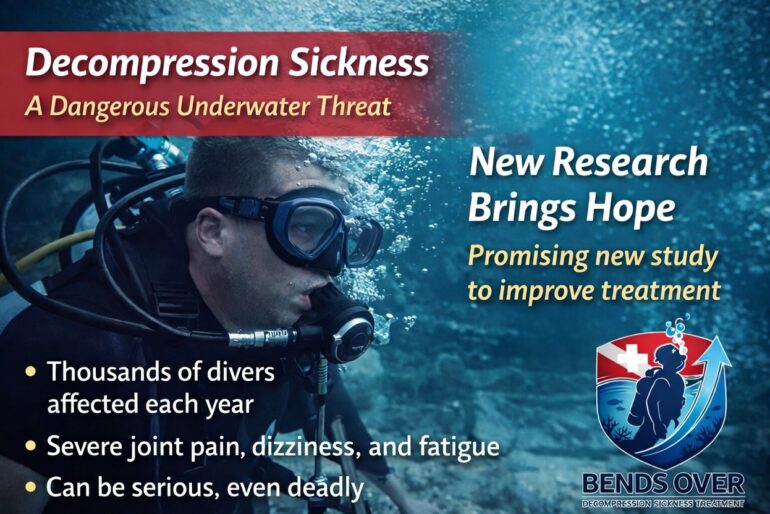
Decompression Sickness: A Hidden Danger Beneath the Surface Most people have heard of “the bends,” but few truly understand how serious decompression sickness can be. It sounds like something rare or extreme. Something that only happens to recreational SCUBA divers, deep-sea divers or professionals pushing limits. The reality is more unsettling. Decompression sickness is unpredictable, sometimes sudden, and in severe cases, life-threatening. What Is Decompression Sickness (DCS)? Decompression sickness is believed to occur when the body experiences a rapid drop in pressure, most commonly after scuba diving. Under pressure, gases like nitrogen dissolve into the bloodstream. When that pressure decreases too quickly, those gases form bubbles inside the body. Think of opening a soda can. The pressure drops, and bubbles appear instantly. Now imagine that happening inside your blood vessels and tissues. Those bubbles can: Block blood flow Damage nerves and organs Trigger inflammation and clotting responses How Common Is It? While decompression sickness is considered relatively rare, it is far from insignificant. In the United States, roughly 1,000 cases per year Even more concerning, the condition can affect not just divers, but also: Pilots and aircrew Astronauts Workers in pressurized environments So while the percentage per dive may seem small, the real-world impact is very real. What It Feels Like Decompression sickness is not just discomfort. It can be terrifying. Symptoms can appear within minutes or take hours to develop. In many cases, they worsen over time. Common symptoms include: Deep joint pain so intense it can force the body to bend over Numbness or tingling in the limbs Extreme fatigue and dizziness Difficulty breathing Confusion or memory problems In severe cases, paralysis or loss of consciousness Joint pain alone occurs in up to 90% of cases, which is why it earned the nickname “the bends” Severe forms can affect the brain, spinal cord, and lungs, and can even be fatal if not treated quickly. Current Treatment and Its Limitations The primary treatment today is hyperbaric oxygen therapy, where patients are placed in a pressurized chamber to reduce bubble size and restore oxygen flow When administered quickly, outcomes are often good. But there are challenges: Treatment requires specialized facilities Delays can lead to permanent damage Some patients experience long-term complications This is why ongoing research into new treatments is so important. New Research Brings Hope At Unique Lab Services, we are landlocked in the middle of the Arizona desert, but are interested in emerging trends in healthcare, diagnostics, and treatment innovation, and this one looks really promising. Recently, we came across some fascinating developments from BioAegis Therapeutics, and University of Maryland School of Medicine under a contract from the U.S. Office of Naval Research, that could represent a new direction in how decompression sickness is approached. For more details, and to stay up to date, check out https://bendsover.com/ While still in development, research like this is exploring new ways to better understand, treat, and potentially reduce the impact of decompression-related injuries. For a condition that can escalate quickly and unpredictably, advancements like these could be game-changing. Why This Matters Decompression sickness is a powerful reminder of how complex the human body is and how quickly things can change under the right conditions. It also highlights something bigger: Healthcare is evolving. We live in exciting times. New technologies, new research, and new ways of delivering care are changing how we approach both prevention and treatment. The Bigger Picture: Healthcare That Comes to You At Unique Lab Services, we are part of that evolution. While decompression sickness may not be something most people deal with daily, the need for accessible, efficient, patient-centered healthcare is universal. We believe: Healthcare should adapt to your schedule Services should come to you Convenience should never compromise quality That is why we provide mobile blood draws and lab services across Phoenix and the East Valley, making it easier for patients to stay on top of their health without unnecessary barriers. Final Thought Conditions like decompression sickness remind us that health is not something to take lightly. But they also show how innovation continues to push medicine forward. As new research develops and healthcare becomes more patient-focused, one thing is clear: The future of healthcare is not just about treatment. It is about making care easier, faster, and more accessible for everyone.